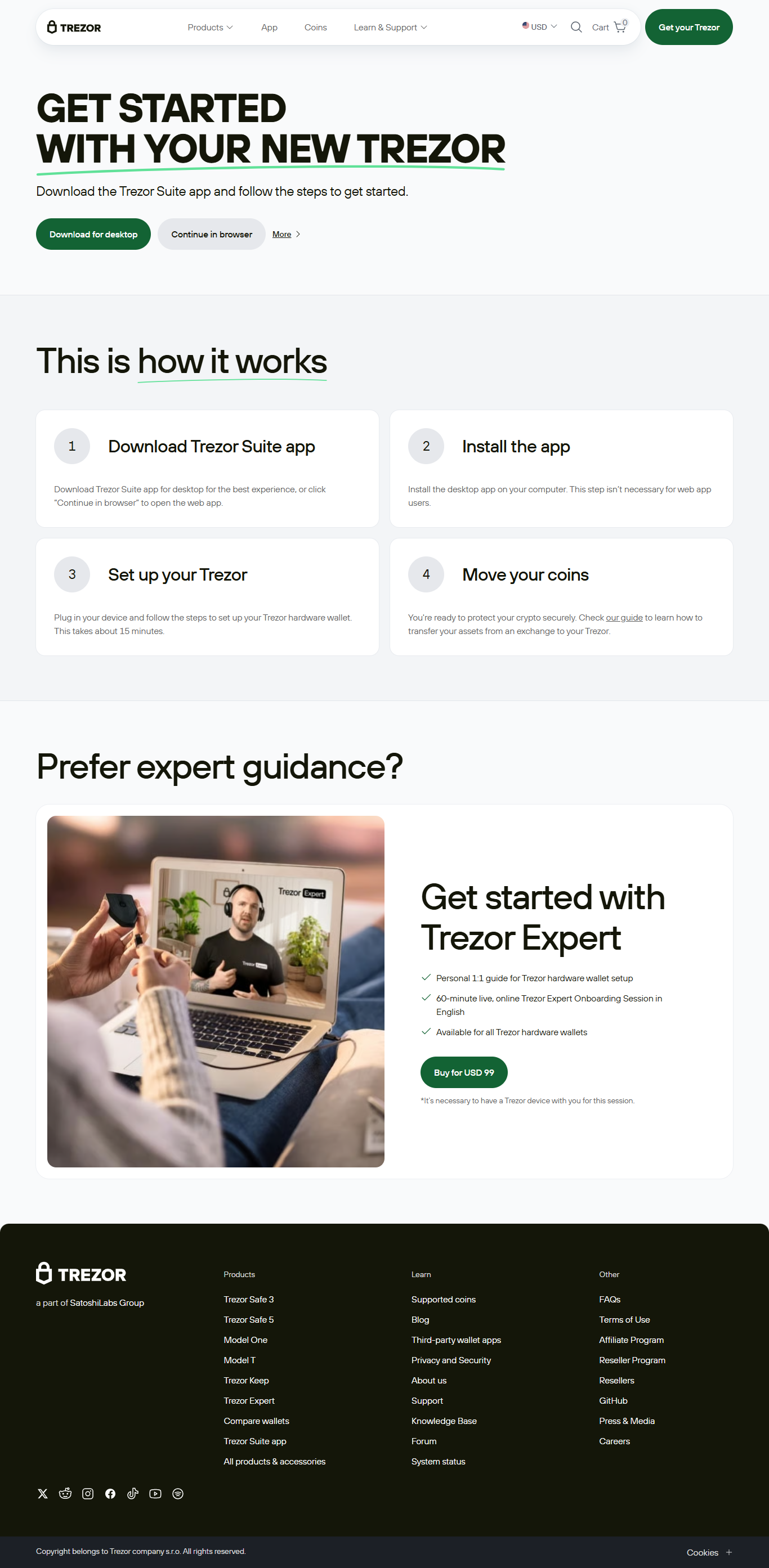
Trezor Bridge® — Connect Your Trezor to Web Browsers®™
Trezor Bridge® is an essential connectivity tool that enables secure communication between Trezor hardware wallets and web browsers. Designed as part of the official Trezor ecosystem, Trezor Bridge ensures that users can safely manage cryptocurrencies online without exposing private keys or sensitive data. As crypto security becomes increasingly important, Trezor Bridge plays a crucial role in maintaining trust, privacy, and control for hardware wallet users.
When paired with Trezor Suite, Trezor Login, and the official onboarding process at trezor.io/start, Trezor Bridge creates a complete and secure environment for interacting with blockchain networks through modern browsers. It operates silently in the background, yet its function is vital for seamless and protected wallet access.
What Is Trezor Bridge?
Trezor Bridge is official background software developed to connect a Trezor hardware wallet to web-based applications and supported browsers. It replaces older browser extensions and provides a more reliable, secure, and future-proof method for device detection and communication.
Unlike traditional wallet software, Trezor Bridge does not manage funds, store private keys, or access recovery phrases. Instead, it acts as a secure bridge between the hardware wallet and trusted interfaces such as Trezor Suite. All cryptographic operations remain isolated within the hardware wallet, ensuring that sensitive data never touches the internet-connected device.
Why Trezor Bridge Is Essential for Browser Connectivity
Web browsers do not natively support direct communication with hardware wallets. Trezor Bridge solves this problem by creating a controlled and encrypted communication channel between the wallet and the browser.
Key benefits of using Trezor Bridge include:
Secure device detection in supported browsers
Encrypted communication between wallet and software
Protection against unauthorized applications
Stable performance across operating systems
Without Trezor Bridge, users may encounter issues such as browsers failing to recognize the device or incomplete wallet functionality when accessing web-based services.
How Trezor Bridge Works with Trezor Suite
Trezor Suite is the official wallet management platform for Trezor hardware wallets, and Trezor Bridge is a foundational component for its web-based operation.
When a user opens the web version of Trezor Suite, the application communicates with the hardware wallet through Trezor Bridge. The Bridge verifies the legitimacy of the request and establishes a secure channel. Any sensitive operation—such as sending funds, approving transactions, or managing accounts—must still be physically confirmed on the Trezor device.
This layered security design ensures that even if a browser or computer is compromised, attackers cannot bypass hardware confirmation.
Trezor Login and Secure Authentication
Trezor Login is a passwordless authentication method that uses cryptographic verification instead of traditional credentials. When used alongside Trezor Bridge, it provides an exceptionally secure login experience.
With Trezor Login, users authenticate by approving requests directly on their hardware wallet. Trezor Bridge securely transmits these authentication requests between the browser and the device. This eliminates risks associated with weak passwords, phishing emails, and credential reuse.
The integration of Trezor Login within the Trezor ecosystem highlights the company’s commitment to security-first authentication and user-controlled access.
Getting Started Safely at trezor.io/start
The safest way to install and use Trezor Bridge is through https://trezor.io/start, the official setup page provided by Trezor. This page guides users step by step through installing all required components, including Trezor Suite and Trezor Bridge.
At trezor.io/start, users can:
Download the official Trezor Suite application
Automatically install Trezor Bridge if needed
Verify the authenticity of their hardware wallet
Set up a new wallet or restore an existing one
Using trezor.io/start ensures that all software is genuine and free from tampering. It also protects users from fake websites that attempt to impersonate official wallet downloads.
Supported Browsers and Operating Systems
Trezor Bridge is compatible with major operating systems, including Windows, macOS, and Linux. It is designed to work smoothly with modern web browsers that support hardware wallet connectivity.
Once installed, Trezor Bridge runs in the background and requires minimal system resources. It automatically detects when a supported application or browser needs to communicate with the hardware wallet, making the user experience seamless and intuitive.
Regular updates ensure ongoing compatibility with browser changes and operating system upgrades.
Security and Privacy by Design
Security is the foundation of Trezor Bridge. The software does not collect personal information, track activity, or store transaction data. Its sole responsibility is to facilitate secure communication between the wallet and authorized applications.
Trezor Bridge uses encrypted channels and strict permission controls to prevent unauthorized access. Only trusted applications, such as Trezor Suite, are allowed to interact with the hardware wallet.
This design aligns with the broader Trezor philosophy of minimizing trust and maximizing user control.
Common Scenarios Where Trezor Bridge Is Used
Trezor Bridge is especially important in the following situations:
Accessing the web version of Trezor Suite
Managing crypto assets through browser-based interfaces
Using Trezor Login for secure authentication
Connecting to supported third-party services
In each scenario, Trezor Bridge ensures that communication remains secure and that the user maintains full authority over approvals and confirmations.
Troubleshooting Trezor Bridge Connectivity Issues
If a browser fails to detect a Trezor device, Trezor Bridge is often the key component to check. Common solutions include:
Ensuring Trezor Bridge is installed and running
Restarting the browser or computer
Updating Trezor Suite to the latest version
Reinstalling Trezor Bridge from trezor.io/start
These steps resolve most connection problems and restore proper device communication.
Why Using Official Sources Matters
The popularity of hardware wallets has led to an increase in phishing attempts and fake software downloads. Malicious versions of Trezor Bridge may attempt to steal sensitive data or redirect users to fraudulent websites.
To stay safe, always download and update Trezor Bridge through trezor.io/start or official prompts within Trezor Suite. Avoid third-party download sites and sponsored advertisements that claim to offer wallet software.
Final Thoughts
Trezor Bridge® is a critical yet often overlooked component of secure hardware wallet usage. While it operates quietly in the background, its role in enabling safe browser connectivity is indispensable.
By working together with Trezor Suite, Trezor Login, and the official setup process at trezor.io/start, Trezor Bridge ensures that users can interact with their crypto assets securely, privately, and confidently. For anyone using a Trezor hardware wallet, understanding and properly using Trezor Bridge is essential for maintaining long-term security and peace of mind.
Frequently Asked Questions (FAQ)
What does Trezor Bridge do?
Trezor Bridge allows secure communication between a Trezor hardware wallet and web browsers or desktop applications.
Is Trezor Bridge required for browser use?
Yes, Trezor Bridge is often required to enable browsers to detect and interact with a Trezor device.
Does Trezor Bridge store private keys?
No, Trezor Bridge never stores private keys or recovery phrases. All sensitive data remains on the hardware wallet.
Where can I download Trezor Bridge safely?
Always download Trezor Bridge from the official setup page at https://trezor.io/start.
Is it safe to keep Trezor Bridge running in the background?
Yes, Trezor Bridge is designed to run securely in the background with minimal system impact.